




Garlic Grading Standards from China: Sizes, Quality Classes and Export Selection
Grading Garlic: Why Size and Quality Class Matter
Garlic is traded in a surprisingly precise way. Buyers specify not just 'white garlic' or 'purple garlic', but exact size ranges, clove counts and quality standards. Understanding how Chinese garlic is graded helps importers order exactly what their market needs and avoid costly mismatches at the container door.
Chinese grading systems are built on bulb diameter, measured across the widest part of the bulb. Common export sizes are graded in centimetres, for example 4.5-5.0cm, 5.0-5.5cm, 5.5-6.0cm and 6.0cm and above. Larger bulbs generally command higher prices and are favoured for fresh retail, while smaller sizes suit processing. The size grade is the first thing most buyers see on a specification sheet.
Clove Count and Skin Colour
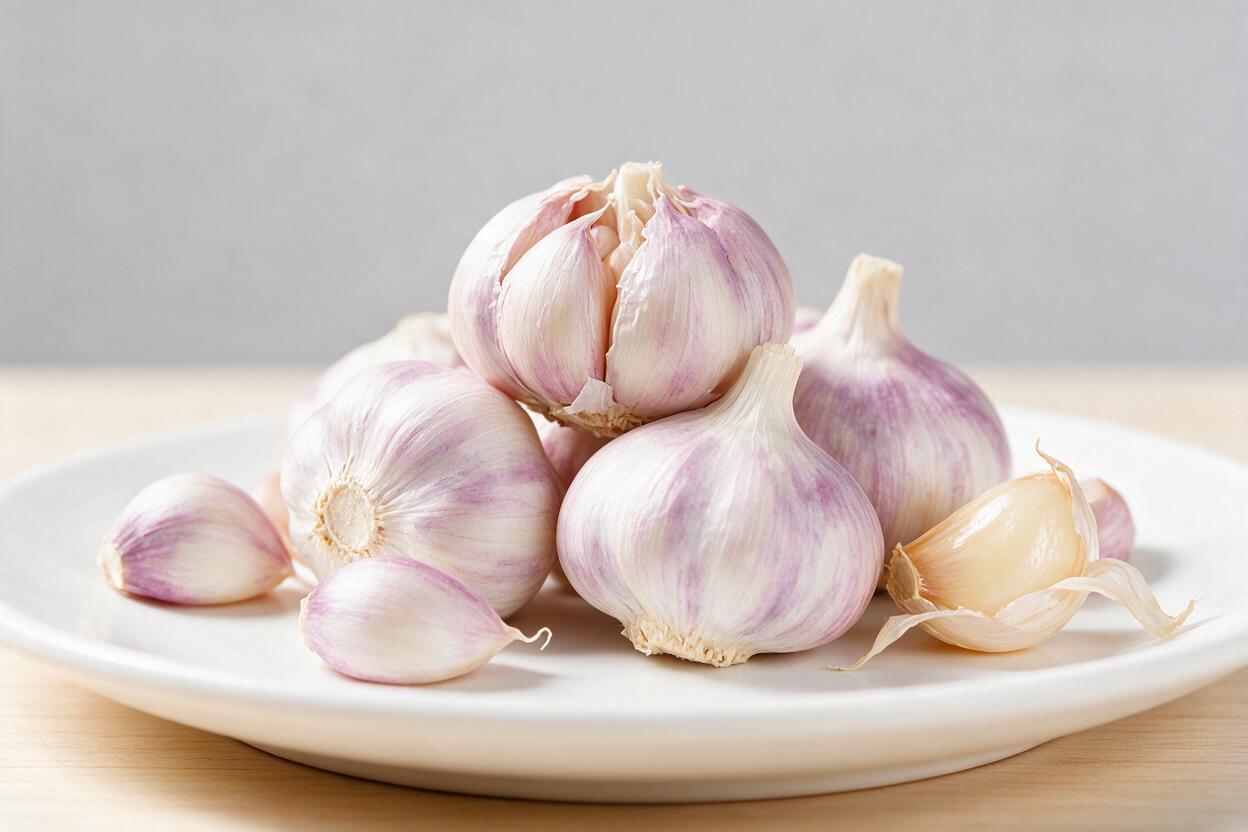
Alongside size, buyers look at the number of cloves per bulb. Garlic with fewer, larger cloves is often preferred for fresh markets because it is easier to peel and more attractive on the shelf, while garlic with more, smaller cloves may be chosen for processing. Clove arrangement should also be neat and regular, which is a sign of good growing conditions and proper variety.
Skin colour matters for certain markets. White-skinned garlic is clean and bright with a mild-to-moderate flavour, and is the most widely traded type for fresh consumption. Purple-skinned garlic, with streaks of violet on the outer skins, is prized in many regions for its firmer texture and stronger, more aromatic flavour. Chinese exporters grow both, giving buyers a choice depending on their cuisine and customer base.
Quality Classes and Defects to Watch
Quality class determines how strict the sorting is. Premium export grades require bulbs that are uniform in size, well-filled, with intact skins, clean cuts, and no sprouting, mould, softness, bruising or insect damage. Standard grades allow slightly more tolerance on uniformity and minor cosmetic faults, while processing grades are more forgiving of appearance but still require sound, healthy garlic.
Several defects shorten shelf life or disappoint buyers. Sprouted bulbs lose crispness and flavour quickly. Soft, spongy bulbs indicate poor curing or storage. Mould, often first visible at the neck, can spread inside a carton. Careful grading removes these before packing so that the garlic buyers receive is clean, firm and dry.
From Field to Export Carton
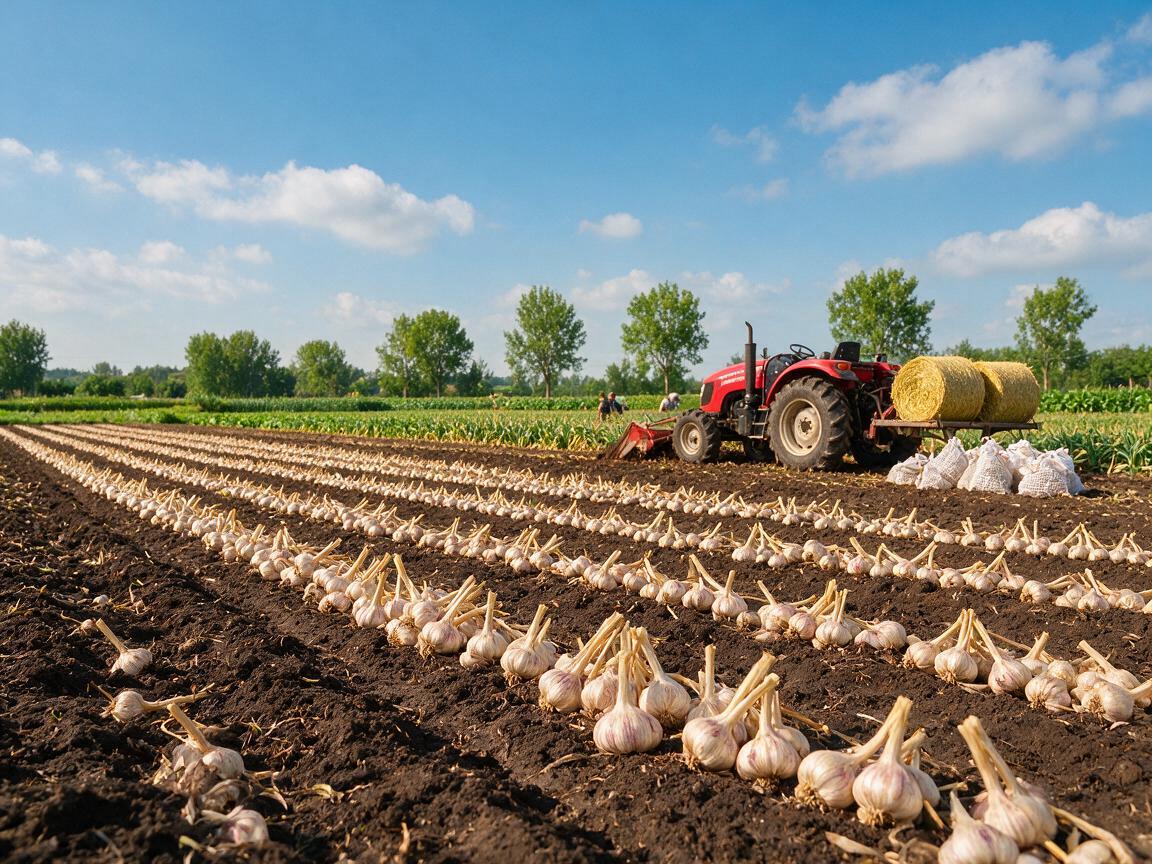
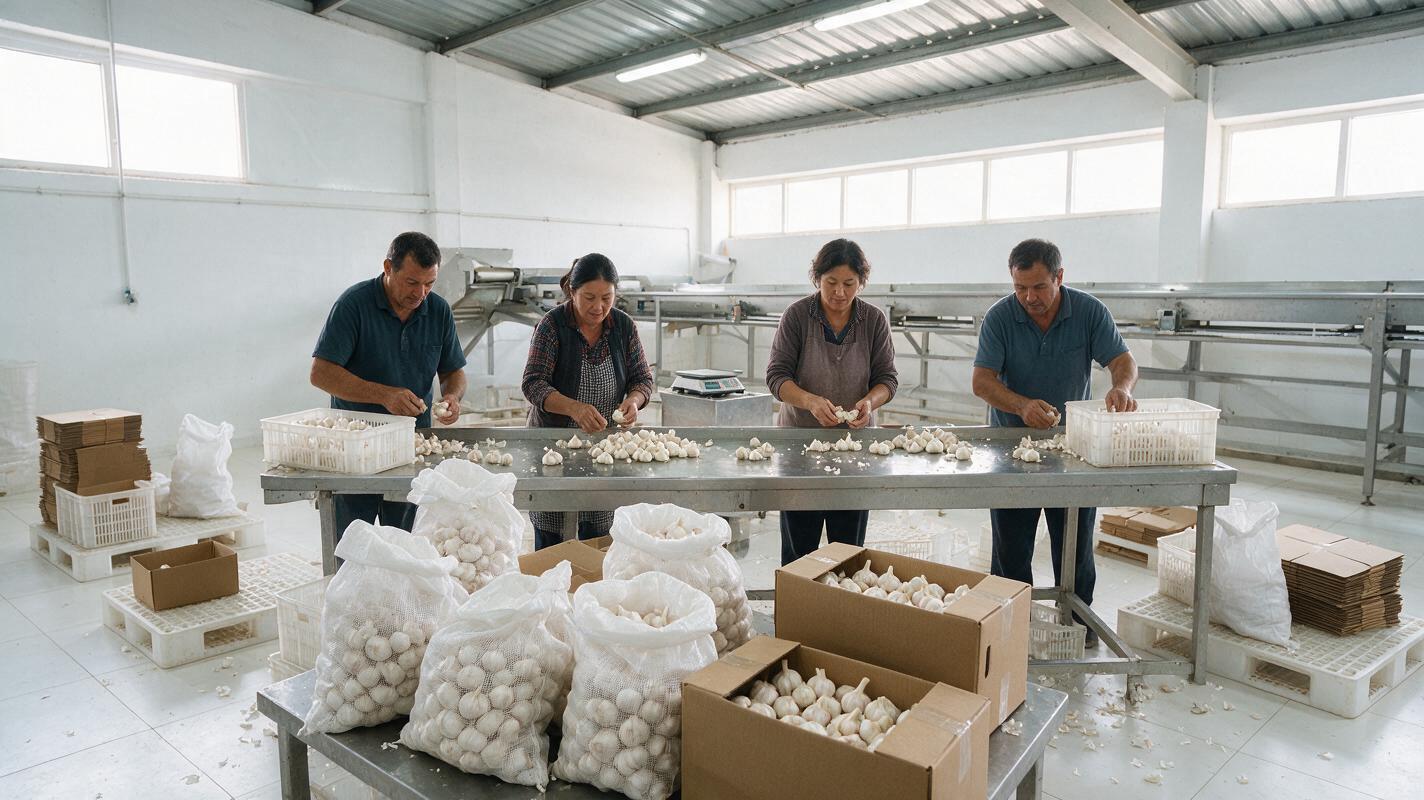
Chinese garlic is harvested, cured and dried before it is graded. After curing, bulbs are cleaned, trimmed, sorted by size and quality, and packed into mesh bags, woven bags or cartons. Good exporters control moisture carefully, because garlic that is too wet can rot and garlic that is crushed by overpacking loses value. The result is a product with a strong shelf life that travels well.
When buying Chinese garlic, always confirm the size range, clove count, skin type and quality class in writing, and ask for photos or samples of the exact grade. A reliable supplier like Huasheng Fruits & Vegetables can provide white and purple garlic across the common export grades, with clean, well-sorted bulbs and consistent sizing for fresh retail and processing alike.