

Shipping Onions From China by Sea: Container Loading, Ventilation and Transit Planning
Why Sea Freight Powers Onion Trade
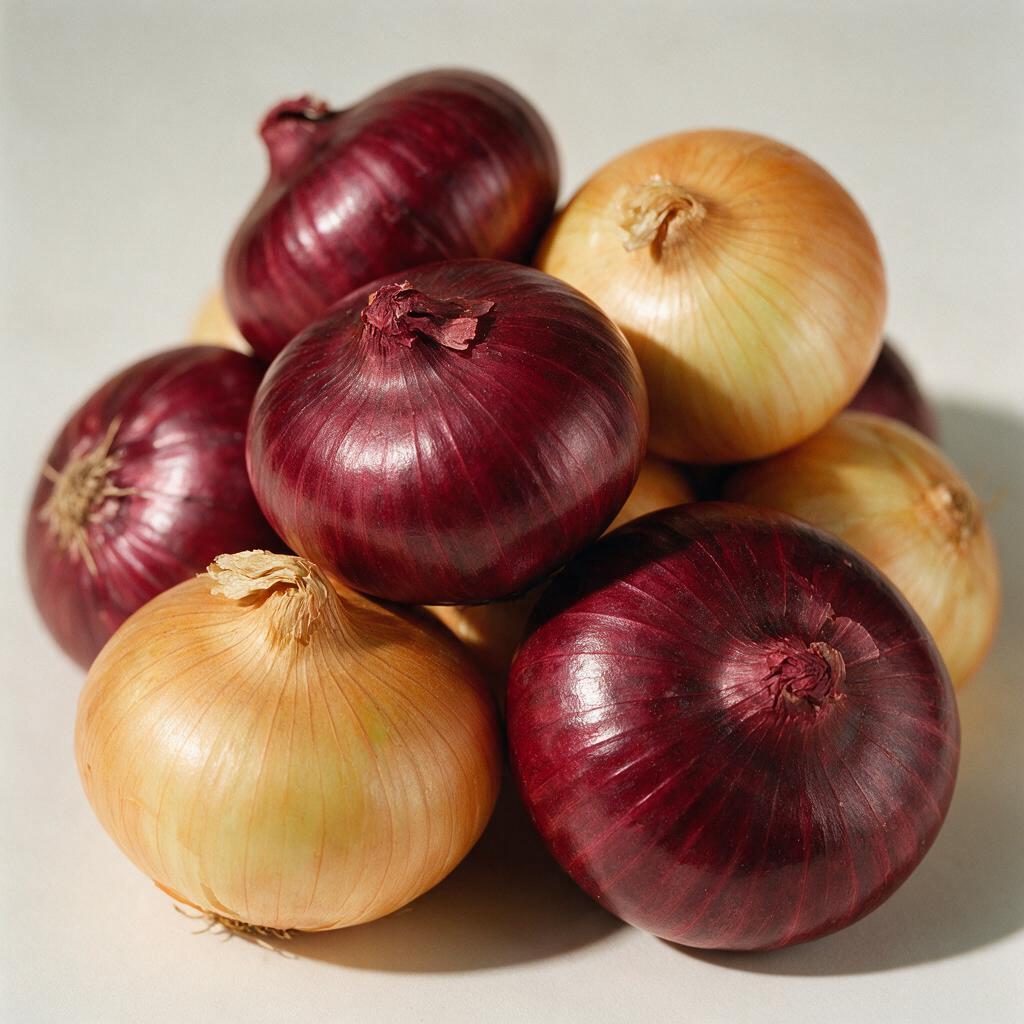
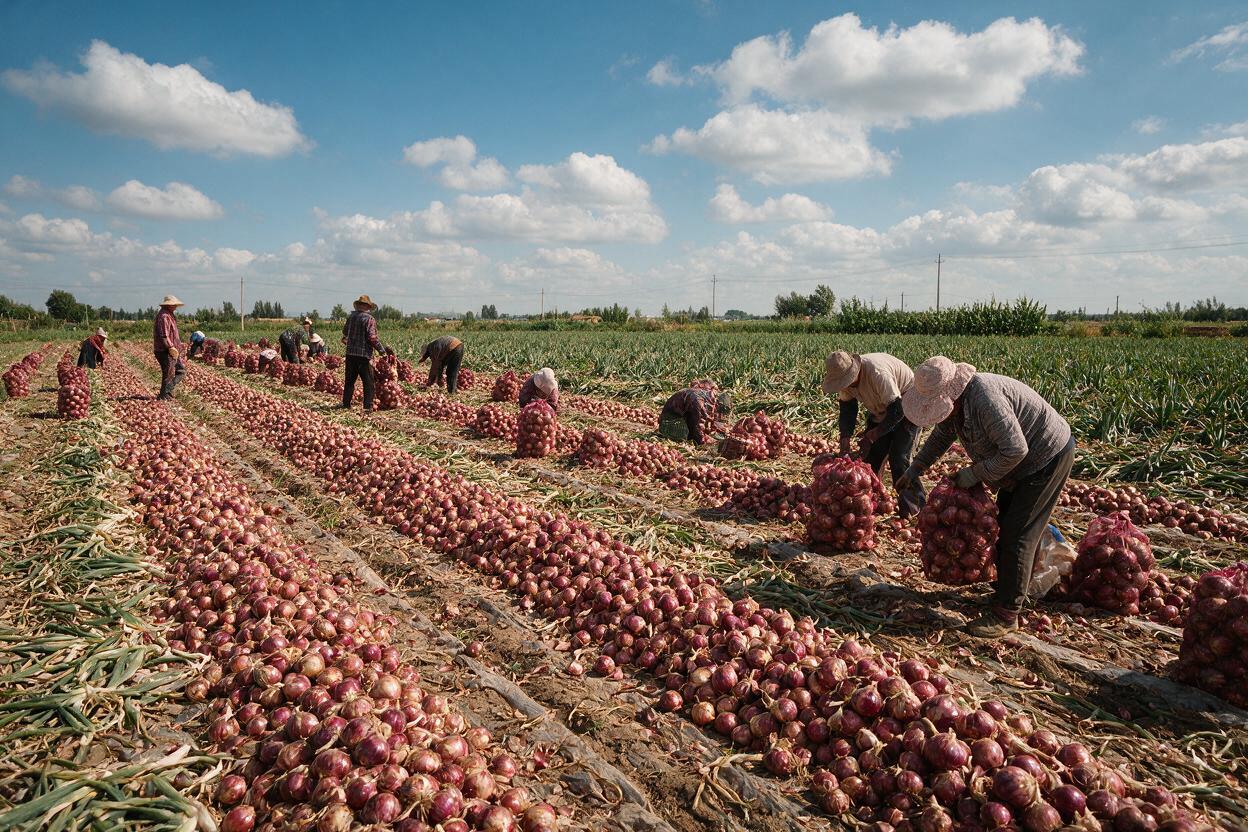
Onions are a high-volume, relatively low-cost crop, so sea freight is usually the only economical route to distant markets. A single 40-foot container can carry a large payload of bagged or crated onions, making shipping cost per unit one of the biggest levers on landed price. The key is protecting that cargo so it arrives in the same firm, dry condition in which it left the packhouse.
Loading Density and Palletization
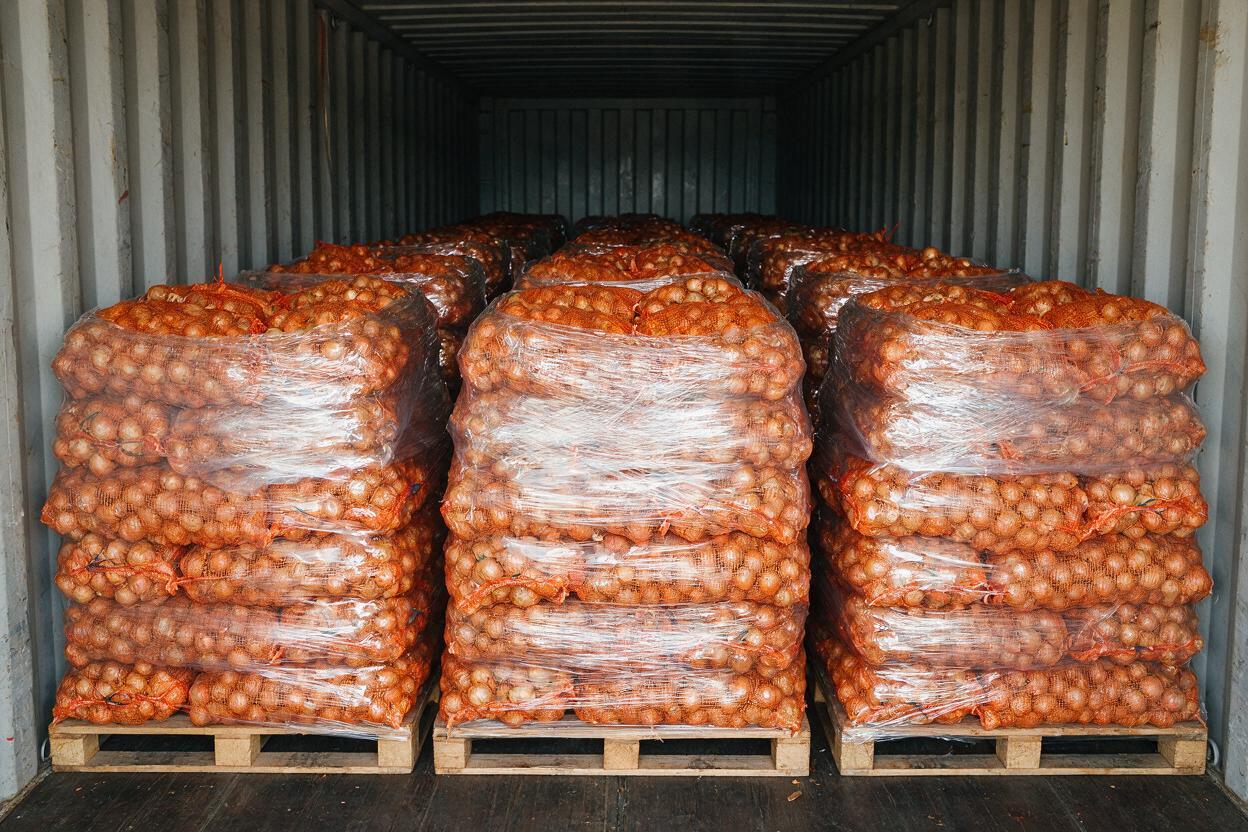
Net bags are the classic onion format, and how they are stacked determines both payload and air movement. Even loading across the floor avoids gaps where condensation can form, while pallets speed up loading, unloading and warehouse handling at the destination. Good palletization keeps each bag ventilated within the stack so heat and humidity do not build up in the centre of the load.
Ventilation, Temperature and Transit Time
Onions are semi-perishable: they respire and can sprout or sweat if the atmosphere is poorly managed. Ventilated containers allow air exchange that carries away moisture, while keeping temperature steady slows sprout development and skin deterioration. Matching container selection and packing density to real transit time matters — a voyage of 15 days demands a different packing profile than one of 40.
Plan Your Season with Us
Choosing the right harvest window, drying the crop thoroughly and booking space ahead of peak demand are the practical steps that prevent surprise claims. We handle grading, drying, bagging, palletization and the shipping paperwork, so your onion project holds its quality from farm to foreign port.